
What Is the Difference Between UI and UX Design?
What Is the Difference Between UI and UX Design?
A Complete Guide to Understanding UI and UX in Modern Web and App Development
In today's digital-first world, businesses are constantly competing for user attention. Whether it's a mobile app, an e-commerce store, or a corporate website, the way users interact with a digital product determines whether they stay or leave within seconds. This is where UI and UX design becomes critical. Although these two terms are often used together and sometimes interchangeably they represent two very different aspects of the design process. Understanding this difference is essential for business owners, developers, and anyone planning to build a successful digital product.
In this article, we will break down what UI and UX design actually mean, how they differ, why both are equally important, and how working with UI and UX Design Experts can transform the way your audience experiences your brand online.
What Is UI Design?
UI stands for User Interface, and it refers to the visual elements of a digital product that users interact with directly. This includes buttons, icons, typography, color schemes, spacing, images, and every other visual component that makes up the look and feel of a website or application.
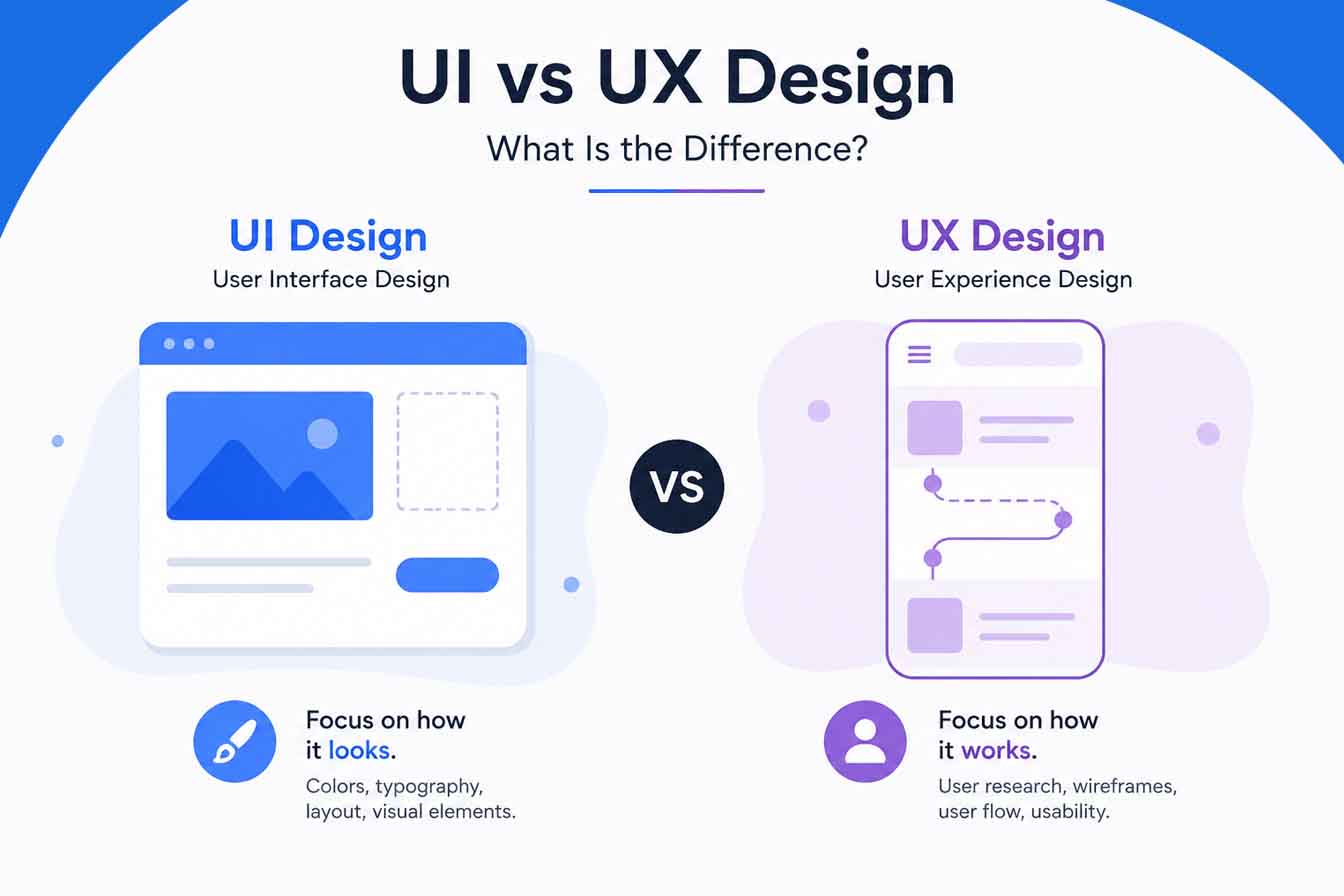
UI design is essentially about how a product looks and feels. A UI designer focuses on making sure that every visual element is consistent, aesthetically pleasing, and easy to interact with. Think of it as the "packaging" of a digital product it's the first thing users notice, and first impressions matter significantly in the digital space.
Some of the key responsibilities of a UI designer include:
- Designing buttons, menus, and interactive elements
- Choosing color palettes and typography that align with brand identity
- Creating responsive layouts that work across devices
- Ensuring visual consistency throughout the platform
- Designing micro-interactions like hover effects and animations
A well-crafted UI doesn't just look attractive it also guides users intuitively through a website or app, making navigation feel natural and effortless.
What Is UX Design?
UX stands for User Experience, and it focuses on the overall journey and experience a user has while interacting with a product. Unlike UI, which is purely visual, UX design is concerned with functionality, usability, and how the product makes users feel.
UX designers work behind the scenes to understand user behavior, pain points, and needs. Their goal is to make sure that every interaction from the moment a user lands on a website to the moment they complete an action, like making a purchase is smooth, logical, and satisfying.
Key responsibilities of a UX designer typically include:
- Conducting user research and usability testing
- Creating user personas and customer journey maps
- Designing wireframes and prototypes
- Structuring information architecture
- Testing and refining the product based on user feedback
While UI is about how something looks, UX is about how something works. A product can look visually stunning but still fail if users find it confusing or frustrating to use and that is exactly why UX design plays such a crucial role in digital success.
The Core Difference Between UI and UX Design
To simplify the distinction, consider this analogy: if a website were a car, UI would be the exterior design, dashboard, and seats the parts you see and touch. UX would be how smoothly the car drives, how comfortable the ride feels, and how easy it is to reach your destination.
Here are the fundamental differences between the two:
1. Focus Area
UI design focuses on the visual and interactive elements of a product. UX design focuses on the overall functionality and user satisfaction throughout the entire journey.
2. Purpose
UI aims to make a product visually appealing and easy to interact with. UX aims to make a product useful, efficient, and enjoyable to use from start to finish.
3. Process
UI design typically comes after UX design. UX designers first map out the structure and flow of the product, and then UI designers apply the visual layer on top of that structure.
4. Tools Used
UI designers often work with tools like Figma, Adobe XD, and Sketch to create visual mockups. UX designers use tools for wireframing, prototyping, and user research, such as user flow diagrams and usability testing platforms.
5. Outcome
The outcome of UI design is a visually polished interface. The outcome of UX design is a smooth, intuitive, and satisfying user journey.
Despite these differences, UI and UX are deeply interconnected. A great product needs both beautiful design without proper functionality will frustrate users, and a highly functional product without an appealing interface will fail to capture attention.
Why Do Businesses Need Both UI and UX Design?
Many businesses underestimate the value of investing in both UI and UX design, often assuming that a good-looking website is enough. However, statistics consistently show that poor user experience leads to higher bounce rates, lower conversions, and lost revenue regardless of how visually appealing a website might be.
Here's why combining strong UI with strong UX matters:
- Improves User Retention: A seamless experience encourages users to stay longer and return in the future.
- Increases Conversion Rates: Clear navigation and visually guided actions lead to more completed purchases or sign-ups.
- Builds Brand Trust: A polished and functional interface reflects professionalism and reliability.
- Reduces Development Costs: Identifying usability issues early through UX research prevents costly redesigns later.
- Enhances Accessibility: Good UI/UX design ensures the product is usable for people with different abilities and devices.
This is why more businesses today are turning to a professional UI and UX Design Company rather than handling design in-house without proper expertise. A specialized company brings structured research, testing, and design systems that significantly improve product performance.
How UI and UX Design Work Together in the Design Process ?
Although UI and UX are distinct disciplines, they follow a connected workflow when building a digital product:
Step 1: Research and Discovery
UX designers begin by understanding the target audience, their needs, and pain points through research and analysis.
Step 2: Wireframing and Structure
Next, UX designers create wireframes simple, skeletal layouts that define where elements will be placed and how users will navigate through the product.
Step 3: Visual Design
Once the structure is finalized, UI designers step in to add colors, typography, imagery, and interactive elements that bring the wireframe to life.
Step 4: Prototyping
A clickable prototype is created to simulate real interactions, allowing teams to test the flow before development begins.
Step 5: Testing and Refinement
Both UI and UX designers collaborate to test the product with real users, gather feedback, and refine the design for better usability and aesthetics.
This collaborative process ensures that the final product is not only visually appealing but also functional, accessible, and aligned with user expectations.
The Role of Professional UI/UX Design Services
As competition grows online, businesses can no longer afford to treat design as an afterthought. Investing in Website UI and UX Design Services ensures that every element of a digital product from layout to interaction is crafted with the end user in mind.
Professional design services typically offer:
- Comprehensive user research and competitor analysis
- Custom wireframes and interactive prototypes
- Responsive design for mobile, tablet, and desktop
- Usability testing and continuous optimization
- Design systems that maintain consistency across platforms
Working with experienced professionals also saves time and reduces the risk of costly redesigns down the line. Instead of guessing what users want, a structured design process backed by data and testing leads to measurable improvements in engagement and conversions.
Common Misconceptions About UI and UX Design
There are several misconceptions that often lead businesses to underinvest in design:
"UI and UX are the same thing."
As explained throughout this article, they are related but distinct disciplines, each requiring different skill sets and focus areas.
"A good-looking website automatically means good UX."
Visual appeal does not guarantee usability. A site can look beautiful yet still confuse users with poor navigation or unclear calls to action.
"UX design is only necessary for large companies."
Businesses of all sizes benefit from UX design, as even small usability improvements can significantly increase conversions and customer satisfaction.
"Design is a one-time task."
Both UI and UX require ongoing testing and refinement as user behavior, technology, and market trends evolve over time.
Frequently Asked Questions (FAQs)
Q1: What is the main difference between UI and UX design?
UI design focuses on the visual and interactive elements of a product, while UX design focuses on the overall functionality and experience of using that product.
Q2: Can a designer specialize in both UI and UX?
Yes, many designers specialize in both areas and are often referred to as UI/UX designers. However, larger projects often benefit from dedicated specialists for each discipline.
Q3: Why is UX design considered more important than UI in some cases?
UX design shapes the entire user journey and functionality. If users cannot navigate a product easily, even the most attractive UI won't prevent frustration or abandonment.
Q4: How do I know if my website needs better UI/UX design?
Signs include high bounce rates, low conversion rates, confusing navigation, negative user feedback, or inconsistent design across pages.
Q5: How long does a typical UI/UX design project take?
Timelines vary depending on project complexity, but most projects involve research, wireframing, visual design, prototyping, and testing phases that can take anywhere from a few weeks to a few months.
Q6: Should I hire a UI/UX design company or work with freelancers?
While freelancers can work well for smaller projects, a professional UI and UX Design Company typically offers a more structured process, dedicated research, and long-term design consistency, which is especially valuable for growing businesses.
Final Thoughts
Understanding the difference between UI and UX design is the first step toward building a digital product that not only looks great but also performs exceptionally well. While UI focuses on the visual experience, UX ensures that experience translates into real usability and satisfaction. Together, they form the foundation of successful websites and applications in today's competitive digital landscape.
Businesses looking to strengthen their digital presence should consider partnering with experienced UI and UX Design Experts who understand both the creative and functional aspects of design. Investing in professional Website UI and UX Design Services isn't just about aesthetics it's about creating meaningful, user-centered experiences that drive engagement, build trust, and ultimately grow your business.
Comments on this post