
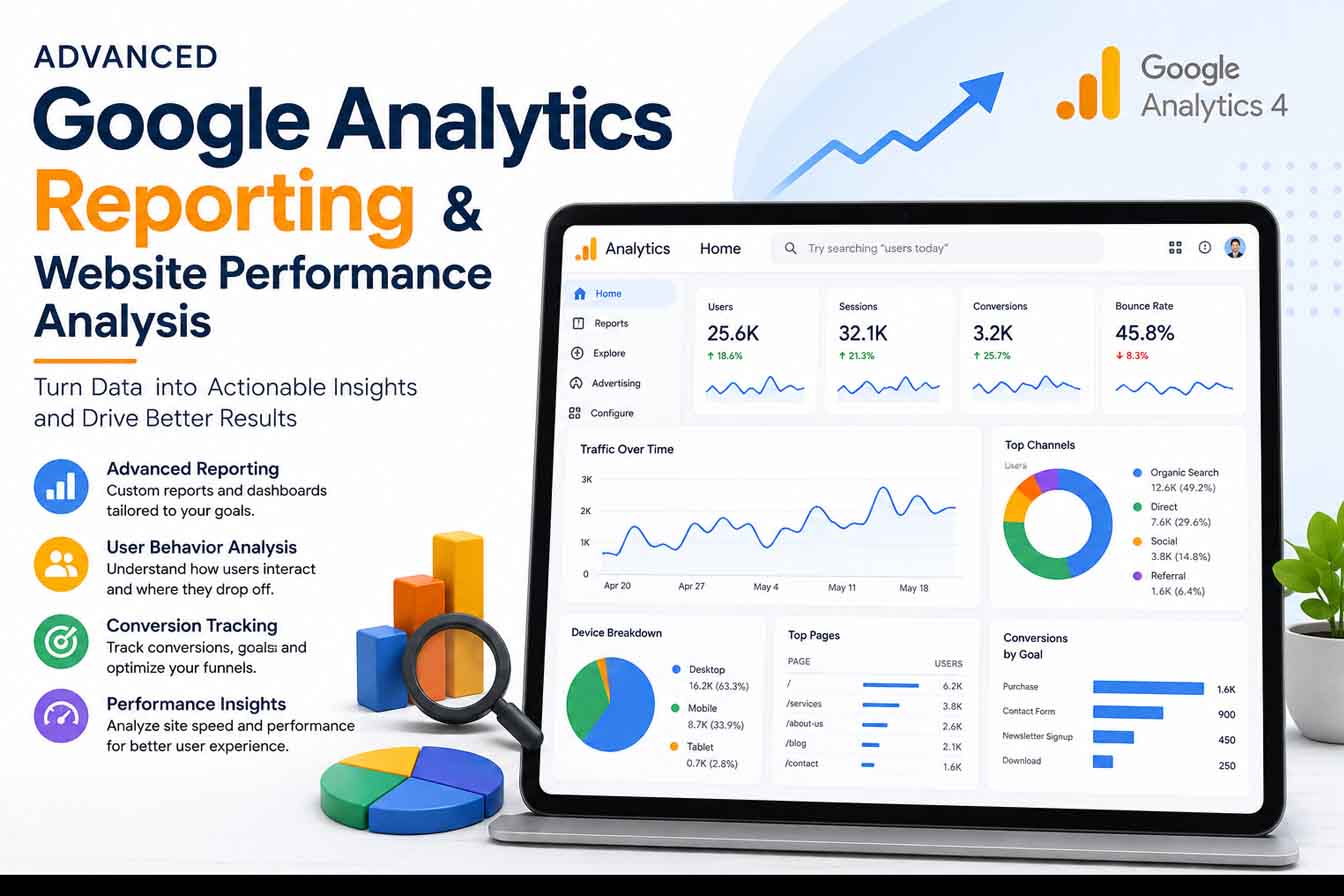
Advanced Google Analytics Reporting and Website Performance Analysis
Advanced Google Analytics Reporting and Website Performance Analysis
Understanding how visitors interact with a website is no longer optional for businesses that want to grow online. Advanced Google Analytics reporting gives marketers, business owners, and developers the ability to look beyond surface level numbers like total visits and instead understand the real story behind user behavior. When combined with website performance analysis, this data becomes a powerful tool for making smarter decisions about content, design, and marketing strategy. This article explains how advanced reporting works, why it matters, and how it can be used to improve overall digital performance, while naturally touching on important aspects such as conversion rate optimization, user engagement metrics, and data driven decision making, which remain central themes throughout modern digital marketing.
Moving Beyond Basic Traffic Numbers
Most beginners stop at checking how many people visited their website in a day or a month. While this is useful, it tells only a small part of the story. Advanced reporting in Google Analytics allows users to dig into where traffic is coming from, what devices people are using, how long they stay, and what actions they take before leaving. This deeper level of analysis helps identify patterns that are invisible in basic dashboards. For example, a website might have high traffic but very low engagement, which signals that the content is not matching what visitors expected when they clicked through. Without advanced segmentation and custom reporting, this kind of problem would go unnoticed for months, slowly damaging both search rankings and conversion rates.
Custom Reports and Segmentation for Precise Insights
One of the most valuable features of advanced analytics is the ability to build custom reports tailored to specific business goals. Instead of relying only on default reports, marketers can create segments based on user location, traffic source, device type, or even behavior such as cart abandonment. This level of segmentation makes it possible to compare how different audience groups behave on the same website. A business might discover that mobile users from social media have a much higher bounce rate than desktop users from organic search, which would immediately suggest that the mobile experience needs improvement. Custom reports also allow teams to track key performance indicators that matter most to their specific industry, rather than being limited to generic metrics that may not reflect real business outcomes.
Tracking User Behavior and Engagement Patterns
Understanding user engagement metrics is one of the most important parts of advanced reporting. Metrics such as average session duration, pages per session, and scroll depth reveal how genuinely interested visitors are in the content being presented. A website could be attracting thousands of visitors, but if most of them leave within a few seconds, the traffic is essentially wasted. By Professional Google Analytics Setup and Conversion Tracking Services analyzing behavior flow reports, businesses can see exactly where users drop off during their journey through the site. This information is incredibly useful for identifying weak pages, confusing navigation, or content that fails to hold attention. When these patterns are studied over time, they reveal trends that help guide content strategy, page layout decisions, and even internal linking structures designed to keep users engaged longer.
Website Performance and Page Speed Analysis
Website performance is closely tied to analytics because slow loading pages directly affect user behavior and search engine rankings. Advanced analysis often combines Google Analytics data with performance tools to understand how page speed impacts bounce rate and conversions. A page that takes several seconds to load can lose a significant portion of visitors before they even see the content. By cross referencing performance metrics with analytics reports, teams can identify which specific pages are causing the most harm to user experience. This is particularly important for ecommerce websites, where even a small delay in loading time can lead to lost sales. Regularly monitoring performance alongside behavioral data ensures that technical issues are caught early before they cause long term damage to both rankings and revenue.
Conversion Tracking and Goal Optimization
At the core of advanced reporting lies conversion tracking, which measures how effectively a website turns visitors into customers, subscribers, or leads. Setting up goals and events allows businesses to monitor specific actions such as form submissions, purchases, downloads, or newsletter signups. Once this data is collected, it becomes possible to analyze the entire conversion funnel and identify exactly where potential customers are dropping off. This is where conversion rate optimization becomes essential, since even small improvements in the checkout process or signup form can lead to significant increases in revenue. Advanced reports often break down conversions by channel, allowing marketers to see which traffic sources are bringing in the most valuable customers, rather than simply the most visitors.
Attribution Modeling and Marketing Channel Analysis
Another powerful aspect of advanced analytics is attribution modeling, which helps determine which marketing channels deserve credit for a conversion. A customer might first discover a brand through a social media post, return later through a search engine, and finally convert after clicking an email link. Without proper attribution analysis, it would be easy to assume that email alone drove Google Analytics Audit, Event Tracking, and Ecommerce Analytics Services the sale, when in reality multiple touchpoints contributed to the decision. Understanding these multi channel paths allows marketing teams to allocate their budgets more effectively, investing in the channels that truly influence customer decisions rather than the ones that simply appear last in the journey. This level of insight transforms marketing from guesswork into a measurable, strategic process.
Real Time Reporting and Immediate Decision Making
Real time data has become increasingly important in fast moving digital environments. Advanced reporting tools allow businesses to monitor live traffic during product launches, marketing campaigns, or promotional events. This immediate visibility makes it possible to react quickly if something goes wrong, such as a sudden drop in traffic due to a technical error or an unexpected spike that requires additional server resources. Real time analysis also helps marketing teams test different messaging or offers and see almost instant feedback on what resonates with the audience. This kind of agility was simply not possible with traditional reporting methods that relied on data being reviewed days or weeks after the fact.
Predictive Insights and Data Driven Strategy
As analytics platforms continue to evolve, predictive capabilities are becoming a major part of advanced reporting. By analyzing historical patterns, these tools can forecast future behavior such as which users are likely to make a purchase or which customers might be at risk of churning. This predictive layer adds enormous value because it shifts analytics from simply describing what has already happened to actively guiding future strategy. Businesses that embrace data driven decision making are able to allocate resources more efficiently, focusing efforts on the customers and channels most likely to generate long term value. This proactive approach is one of the clearest advantages that advanced analytics offers over basic reporting methods.
Common Challenges in Advanced Analytics
Despite its many benefits, advanced reporting comes with challenges that organizations must address carefully. Data accuracy depends heavily on proper tracking implementation, and even small configuration errors can lead to misleading conclusions. Privacy regulations have Google Analytics Reporting, Ecommerce Analytics User Behavior Analysis also changed how data can be collected and used, requiring businesses to balance detailed tracking with user consent and data protection requirements. Additionally, the sheer volume of available metrics can overwhelm teams that lack clear goals, leading to analysis paralysis rather than actionable insights. Successful use of advanced analytics requires not just technical setup but also a clear understanding of which metrics actually matter for specific business objectives.
Best Practices for Sustainable Analytics Success
To get the most value from advanced reporting, businesses should focus on a few core practices. First, tracking should be set up correctly from the beginning, with clear goals and events that align with actual business outcomes rather than vanity metrics. Second, reports should be reviewed on a consistent schedule rather than only during emergencies, allowing trends to be caught early. Third, teams should combine quantitative data from analytics with qualitative insights such as user feedback or session recordings to gain a fuller picture of behavior. Finally, performance monitoring should never be treated as a one time task, since websites, audiences, and competitive landscapes are constantly changing.
Conclusion
Advanced Google Analytics reporting combined with thorough website performance analysis gives businesses a genuine competitive advantage in today's digital landscape. By moving beyond basic traffic counts and embracing segmentation, behavior tracking, conversion analysis, and predictive insights, organizations can make smarter, faster, and more confident decisions. Website performance, user engagement metrics, and conversion rate optimization are not separate concerns but deeply connected parts of the same strategy. Companies that invest time in mastering these advanced tools position themselves to grow steadily, adapt quickly to changing user needs, and ultimately build stronger, more profitable digital experiences for their audience.
Comments on this post